Clearing Space After Tree Removal
Stump Grinding in Athens for eliminating tripping hazards and preparing yards for replanting
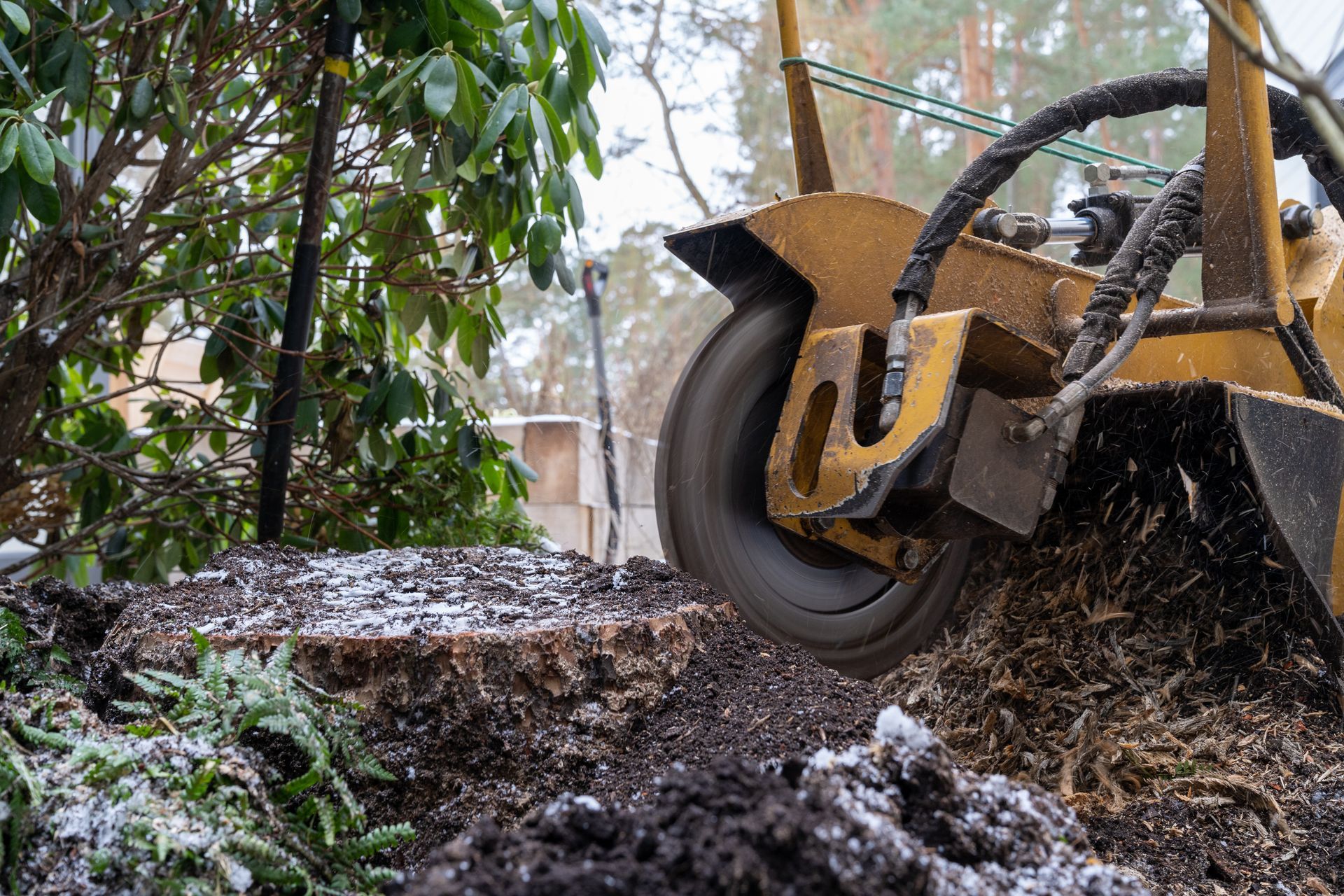
Leftover stumps obstruct mowing patterns, create tripping hazards in high-traffic areas, and attract wood-boring insects that eventually spread to healthy trees nearby. All South Tree Company handles stump grinding in Athens, Georgia, using machine-mounted cutting wheels that reduce stumps to wood chips several inches below ground level, clearing the area for grass, landscaping, or new construction. The grinding depth removes enough of the stump to prevent sprouting and allows soil to be leveled over the top without leaving a visible mound or depression.
The grinding process pulverizes the stump and surface roots into chips, which are either removed from the site or spread as mulch depending on your preference. Grinding below grade eliminates the obstruction without requiring excavation of the entire root system, which would disturb a much larger area and leave a hole that needs extensive filling. In Athens, clay-heavy soils make root removal impractical for most residential projects, so grinding provides clearance for replanting or grass establishment without the labor and disruption of digging out every root.
Request a site evaluation to determine grinding depth and discuss debris removal or mulch reuse based on your landscaping plans.
What Proper Grinding Accomplishes
The grinder's cutting wheel moves horizontally across the stump, shaving it down layer by layer until the entire stump and major surface roots are reduced to chips below the surrounding soil grade. Depth typically reaches six to eight inches below ground level, which is sufficient for grass seeding or planting shrubs, though deeper grinding can be arranged if the area will be paved or used for structures. The machine's weight and vibration can compact surrounding soil, so replanting in the immediate area may require loosening the soil and adding amendments before new plants establish.
Once grinding is complete, you'll notice the stump is gone, the area is level with surrounding soil or slightly depressed, and the space no longer interrupts mowing or foot traffic. The ground where the stump stood will settle over time as the remaining roots decompose underground, which may create a shallow depression that requires topdressing with soil or mulch in the following months. What you gain is usable space that was previously blocked, with no obstruction above ground and no resprouting from the stump.
Stump grinding does not remove the entire root system—underground roots decompose naturally over several years and do not typically interfere with grass or most landscaping. If construction is planned directly over the stump location, complete root excavation may be required, which involves heavy equipment and creates a large void that needs structural fill. The service includes grinding the stump itself and surface roots within a few feet of the trunk, with wood chips either hauled away or left on-site as organic mulch depending on your needs.
Common Questions About This Service
Property owners often ask about grinding depth, what to do with the chips, and how soon replanting can happen.
How deep does the stump need to be ground for replanting?
Six to eight inches below grade is sufficient for grass seed or most plants, though deeper grinding may be needed if you're installing hardscaping or need a completely level surface for structures.
What should I do with the wood chips left after grinding?
Chips can be spread as mulch in garden beds, used to fill the depression left by the stump, or hauled away if you prefer a clean finish—they decompose slowly and add organic matter to soil over time.
Why does the ground settle after stump grinding?
The stump removal creates a void where the wood mass used to be, and as the remaining underground roots decompose, the soil shifts downward to fill the space, often requiring additional soil or mulch within the first year.
Can I replant a tree in the same spot immediately after grinding?
You can replant once the stump is ground and the hole is filled, but amending the soil with compost improves establishment since the wood chips left behind are low in nitrogen and can temporarily tie up nutrients as they decompose.
What happens if I don't grind a stump after tree removal?
Stumps left in place will sprout new growth from dormant buds, attract termites and carpenter ants, and remain a tripping hazard that obstructs lawn care and makes the area unusable for planting or building.
All South Tree Company provides stump grinding services across Athens, Georgia, for residential and commercial properties needing stumps cleared after tree removal. Call (770) 380-9177 to schedule grinding and discuss depth requirements based on how you plan to use the cleared space.